










Roberto Würth, Tasneem Cheytan, Paul Schwerd-Kleine, Ewgenija Gutjahr, Elisa Donato, Verena Thewes, Beatrice Charlotte Tröster, Theresa Mulholland, Torsten Müller, Daria Doncevic, Laura L Michel, Celina V Wagner, Polina Kozyulina, Mario Hlevnjak, Marc Zapatka, Julia Bulkescher, Rebecca Weber, Sarah-Jane Neuberth, Vera Thiel, Thilo Miersch, Michael Scherer, Johannes Betge, Jeroen Krijgsveld, Carl Herrmann, Peter Lichter, Andreas Schneeweiss, Martin R Sprick, Andreas Trumpp
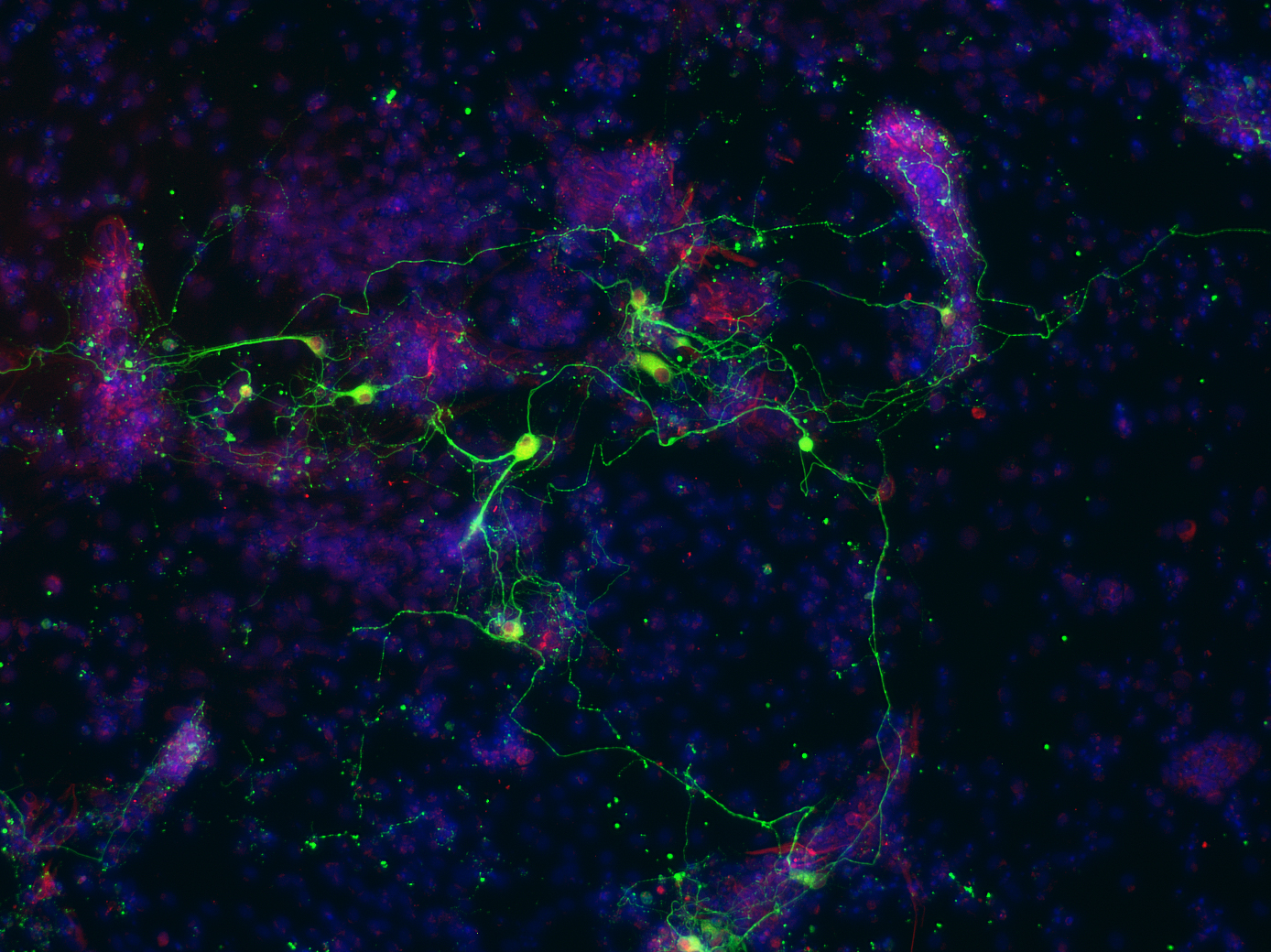
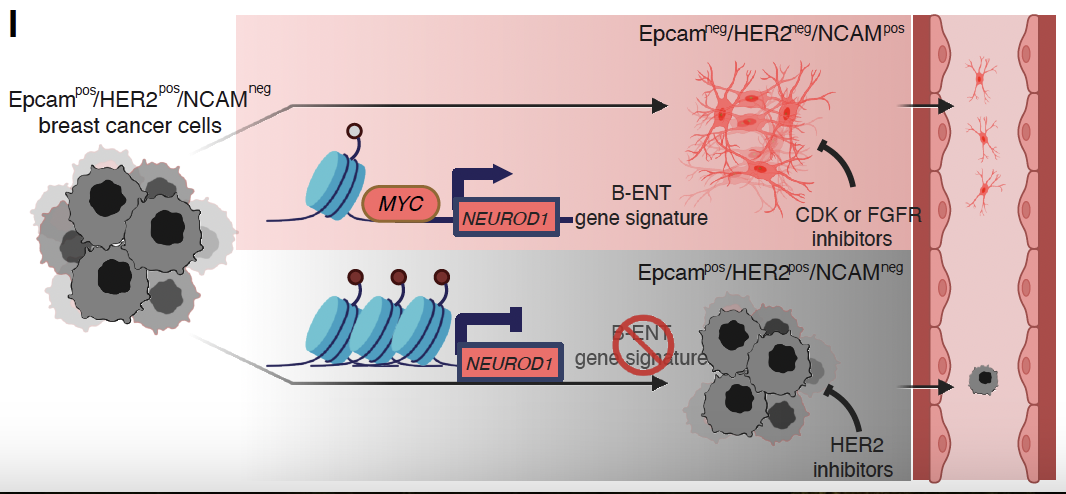
Neuroendocrine differentiation (NED) promotes lineage plasticity and therapy resistance in prostate and lung cancers. Here we identify NED as a route of treatment escape in breast cancer: neuroendocrine features emerged or increased in 22% of progressive cases, predominantly, but not exclusively, in HER2-positive subtype. Using patient-derived, epithelial/neuroendocrine organoid and xenograft models, we map the epigenetic and transcriptional divergence between epithelial and neuroendocrine states arising from a shared mutational background and define a breast cancer neuroendocrine signature. NED involves epigenetic silencing of EpCAM and amplified HER2, while NEUROD1 functions as a master transcriptional regulator of the neuroendocrine fate. NCAM-positive putative circulating tumor cells were detected in patients in whom EpCAM-based detection had failed. Neuroendocrine tumor cells exhibit an FGFR1 dependency associated with NCAM-FGFR1 interaction and mesenchymal FGFR1 splicing. Together, these findings establish NED as a mechanism of escape from HER2-targeted therapy in breast cancer, with implications for disease monitoring and intervention.