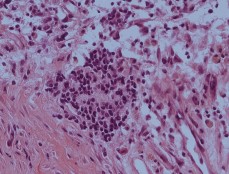
Certain childhood tumors have an extreme need for amino acids. We together with scientists at the Hopp Children's Cancer Center Heidelberg (KiTZ), the German Cancer Research Center (DKFZ) and the University of Heidelberg, have now discovered the molecular mechanisms underlying this and how the cancer cells could be turned off.

Aberrant expression of MYC transcription factor family members predicts poor clinical outcome in many human cancers. Oncogenic MYC profoundly alters metabolism and mediates an antioxidant response to maintain redox balance. Here we show that MYCN induces massive lipid peroxidation on depletion of cysteine, the rate-limiting amino acid for glutathione (GSH) biosynthesis, and sensitizes cells to ferroptosis, an oxidative, non-apoptotic and iron-dependent type of cell death. The high cysteine demand of MYCN-amplified childhood neuroblastoma is met by uptake and transsulfuration. When uptake is limited, cysteine usage for protein synthesis is maintained at the expense of GSH triggering ferroptosis and potentially contributing to spontaneous tumor regression in low-risk neuroblastomas. Pharmacological inhibition of both cystine uptake and transsulfuration combined with GPX4 inactivation resulted in tumor remission in an orthotopic MYCN-amplified neuroblastoma model. These findings provide a proof of concept of combining multiple ferroptosis targets as a promising therapeutic strategy for aggressive MYCN-amplified tumors.

Further Reading:

https://www.dkfz.de/en/presse/pressemitteilungen/2022/dkfz-pm-22-27-Tumors-on-withdrawal-Amino-acid-deficiency-shrinks-childhood-tumors.php

Publication

Alborzinia H, Flórez A.F., Kreth S., Brückner L.M. et al. MYCN mediates cysteine addiction and sensitizes neuroblastoma to Ferroptosis In: Nature Cancer 2022, DOI: 10.1038/s43018-022-00355-4
 

With its "Advanced Grants", the European Research Council ERC supports visionary projects in basic research. This year, the Council awarded Andreas Trumpp with the prestigious research grant. With the project called "SHATTER-AML", Andreas Trumpp wants to better understand which evolutionary processes occur in cancers characterized by structural genetic defects under the pressure of therapy. The results obtained from the example of CK-AML will also expand the understanding of other aggressive cancers that are also based on extensive chromosomal alterations. The goal of the scientists in Trumpp's laboratory is to develop more effective immunological and precision oncology therapies for these cancers, for which treatment options are often inadequate today.

Further Reading:

https://www.dkfz.de/en/presse/pressemitteilungen/2022/dkfz-pm-22-26-ERC-Advanced-Grant-for-Andreas-Trumpp.php

Hamed Alborzinia from Andreas Trumpp lab and his colleague Andres Florez Amaya of the Department of Molecular and Cellular Biology at Harvard University, published a book on ferroptosis entitled Ferroptosis: Mechanism and Diseases. Ferroptosis is a specific metabolic form of iron-mediated cell death that has recently been linked to a variety of diseases and patho-mechanisms. The main goal of this book -according to the authors- is to make ferroptosis quickly accessible, so anyone who dives into any of the chapters can readily understand the pathway. To start, foreword by Scott Dixon one of the scientists who discovered ferroptosis gives as strong motivation on why the study of ferroptosis is therapeutically promising. In the first chapter, the authors illustrate how ferroptosis is connected to other forms of cell death, which can facilitate the understanding and help integrate the information processed in the other chapters. The book dives into different pathologies, starting with pancreatic cancer as one of the hardest cancers to treat and that shows promise to be treated with ferroptosis induction. Infectious diseases, including COVID-19, and their connections with ferroptosis are addressed elegantly by the authors. In between, the role of iron and ferritinophagy which are becoming more and more crucial in explaining the ferroptotic mechanisms are described. The book also offers valuable collection of all currently known activators or inhibitors of ferroptosis. It will enable researchers to choose molecules for experimental design for in vitro and in vivo studies of ferroptosis. Finally, the authors explore the connection of ferroptosis to other cell death pathways such as necroptosis, some crosslinks might appear that are interesting not only biologically but therapeutically by using synergistic compounds to induce both pathways.


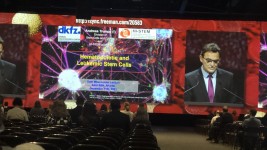
At this year's annual meeting of the American Society of Hematology (ASH), held December 11-14 in Atlanta, Georgia, Andreas Trumpp delivered the prestigious Ham-Wasserman Lecture.

In his lecture, the stem cell researcher reported on differences and similarities between normal and leukemic stem cells. The honor of speaking at the Ham-Wasserman Lecture at the ASH Annual Meeting is considered one of the most prestigious awards in the field of hematology. It is traditionally bestowed upon a physician or researcher outside the United States who has contributed significantly to the understanding and advancement of hematology worldwide.

The invitation to Andreas Trumpp was in recognition of his important work on leukemia stem cells.

Previously, extensive research has focused on hematopoietic stem cells (HSCs) and distinct multipotent progenitor populations (MPP1-4) contained within the Lin- Sca-1+ c-Kit+ (LSK) compartment. In this new study, researchers around Pia Sommerkamp now phenotypically define and functionally characterize MPP5 (LSK CD34+ CD135- CD48- CD150-), a novel subset in the progenitor landscape. The team, which involved colleagues at the Max-Planck Institute in Freiburg, at the Institute Curie in Paris and at Harvard University, reports that MPP5 provide initial emergency myelopoiesis followed by stable contribution to the lymphoid lineage in transplantation settings. Using different in vitroand in vivo approaches as well as RNA-seq and single-cell (sc) RNA-seq analysis, MPP5 were shown to represent a hub within the MPP network.

The work was co-supervised by Andreas Trumpp from HI-STEM/DKFZ and Nina Cabezas-Wallscheid, HI-STEM Alumni and now a junior group leader at the Max-Planck-Institute of Immunobiology in Freiburg, and was published in Blood.


Further Reading:

Publication: Sommerkamp, P., Romero-Mulero, M. C., Narr, A., Ladel, L., Hustin, L., Schonberger, K., Renders, S., Altamura, S., Zeisberger, P., Jacklein, K., Klimmeck, D., Rodriguez-Fraticelli, A., Camargo, F. D., Perie, L., Trumpp, A. & Cabezas-Wallscheid, N. (2021) Mouse multipotent progenitor 5 cells are located at the interphase between hematopoietic stem and progenitor cells, Blood. 137, 3218-3224. doi: 10.1182/blood.2020007876 PMID: 33754628

Subcategories