







Solid Tumors and Metastasis

Solid Tumors, Metastasis & Therapy Resistance

Solid Tumors and Metastasis
Hematopoietic Stem Cells and Leukemia

Hematopoietic Stem Cells and Leukemia

Hematopoietic Stem Cells and Leukemia
Stem Cells and Tumor Microenvironment

Stem Cells and Tumor Microenvironment

Stem Cells and Tumor Microenvironment
HI-STEM Group Leaders

HI-STEM Group Leaders

HI-STEM Group Leaders
PlayPause
previous arrow
next arrow

Esther Rodríguez-CorreaFlorian GrünschlägerTamar NizharadzeNatasha AnsteeJude Al-SabahVojtech KumpostAnastasia SedlmeierCongxin LiMelanie BallFoteini FotopoulouJeyan JayarajanIan GhezziJulia KnochMegan DruceKleo AurichMarleen Büchler-SchäffSusanne LuxPablo Hernández-MalmiercaJulius GräselDominik VonfichtMarta López-OsiasElvira González-SaizDaniel Fernández-PérezAnna MathioudakiJudith ZauggAlejo Rodríguez-FraticelliRalf MikutAndreas TrumppThomas HöferDaniel HübschmannSimon HaasMichael D Milsom

Nature Cell Biology, 2026 May 25 doi: 10.1038/s41556-026-01958-0

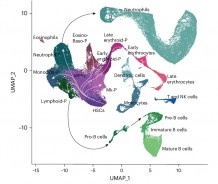
 Haematopoietic stem cells (HSCs) display extensive molecular and functional heterogeneity. However, a cohesive model that explains the relationship and biological relevance of these diverse HSC states remains elusive. Here, by performing single-cell transplantations of over 1,000 highly purified murine long-term HSCs combined with in-depth phenotyping of their clonal progeny, we define kinetics-based reconstitution parameters which aligned HSCs into a single hierarchical trajectory reflective of functional potency. This approach revealed that previously identified lineage biases are actually transitory states along this linear trajectory, not a discrete stable condition. Single-cell secondary transplantations validated hierarchical ordering based on reconstitution kinetics, whereas mathematical modelling combined with experimental modulation of lineage-biased blood production revealed that apparent lineage-biased outputs actually arise from cell-extrinsic feedback regulation and clonal competition between slow- and fast-engrafting clones to fill mature lineages to their compartment size limit. This study reconciles multiple layers of HSC heterogeneity into a unifying framework.

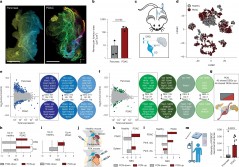
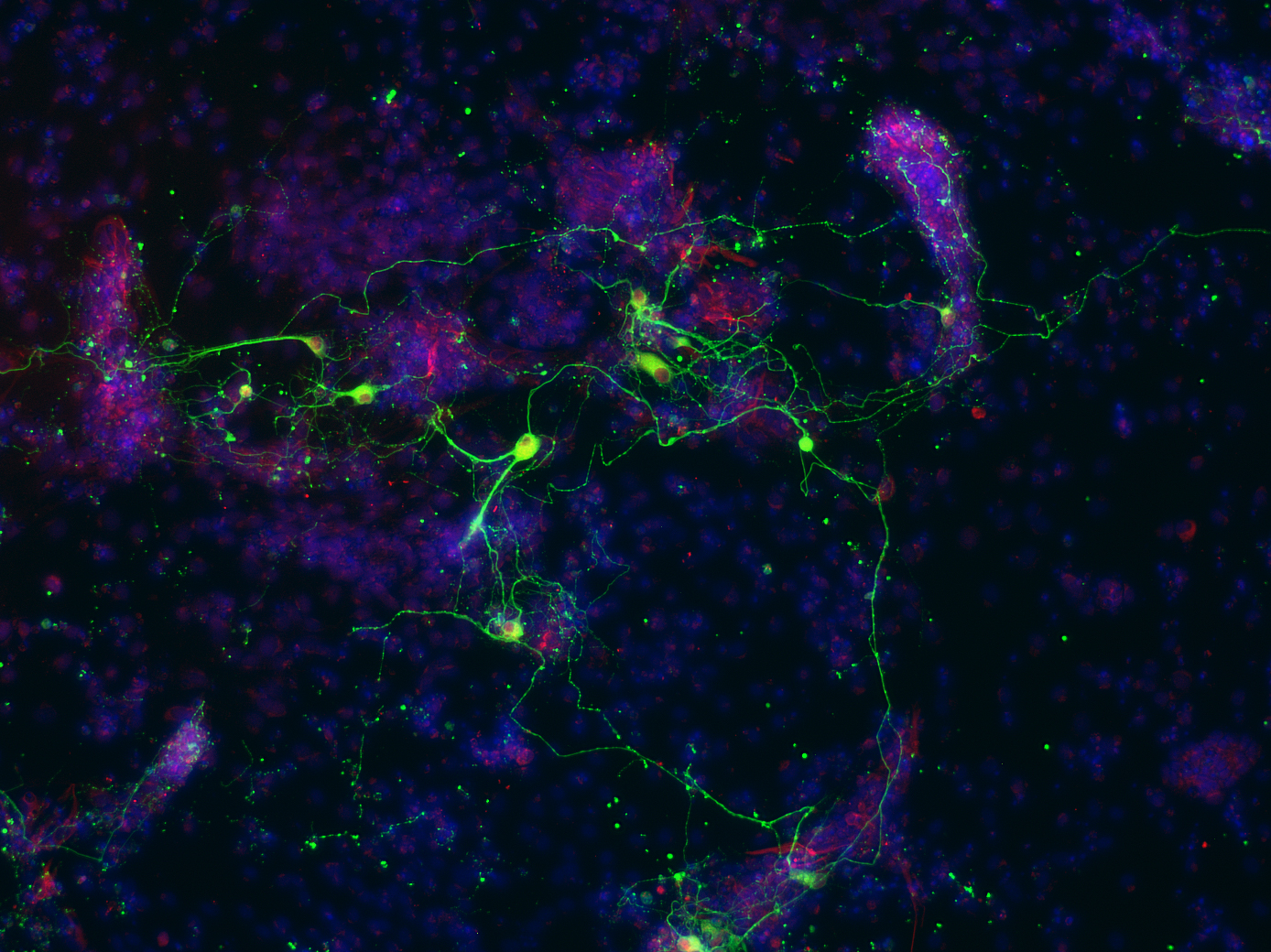
Characterization of single neurons reprogrammed by pancreatic cancer.

Thiel V, Renders S, Panten J, Dross N, Bauer K, Azorin D, Henriques V, Vogel V, Klein C, Leppä AM, Barriuso Ortega I, Schwickert J, Ourailidis I, Mochayedi J, Mallm JP, Müller-Tidow C, Monyer H, Neoptolemos J, Hackert T, Stegle O, Odom DT, Offringa R, Stenzinger A, Winkler F, Sprick M, Trumpp A. Nature. 2025 Apr;640(8060):1042-1051.


Press Release:
 
Interview in Rhein Neckar Zeitung:


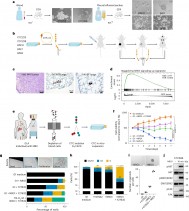
Circulating tumor cell plasticity determines breast cancer therapy resistance via neuregulin 1-HER3 signaling


Würth R, Donato E, Michel LL, Saini M, Becker L, Cheytan T, Doncevic D, Messmer T, Gutjahr E, Weber R, Klein C, Alborzinia H, Yildiz U, Vogel V, Hlevnjak M, Kozyulina P, Neuberth SJ, Schwerd-Kleine P, Jakab S, Pfarr N, Angeles AK, Laut AK, Karpova D, Falcone M, Hardt O, Theek B, Wagner CV, Becker M, Wagner S, Haselmayr M, Schmitt A, Müller-Tidow C, Riethdorf S, Pantel K, Zapatka M, Sültmann H, Herrmann C, Thewes V, Lichter P, Schneeweiss A, Sprick MR, Trumpp A. Nat Cancer. 2025 Jan 3. doi: 10.1038/s43018-024-00882-2.

Single-cell multiomics analysis reveals dynamic clonal evolution and targetable phenotypes in acute myeloid leukemia with complex karyotype

 Leppä AM, Grimes K, Jeong H, Huang FY, Andrades A, Waclawiczek A, Boch T, Jauch A, Renders S, Stelmach P, Müller-Tidow C, Karpova D, Sohn M, Grünschläger F, Hasenfeld P, Benito Garagorri E, Thiel V, Dolnik A, Rodriguez-Martin B, Bullinger L, Mrózek K, Eisfeld AK, Krämer A, Sanders AD, Korbel JO, Trumpp A. Nat Genet. 2024 Dec;56(12):2790-2803. doi: 10.1038/s41588-024-01999-x. Epub 2024 Nov 25.PMID: 39587361